
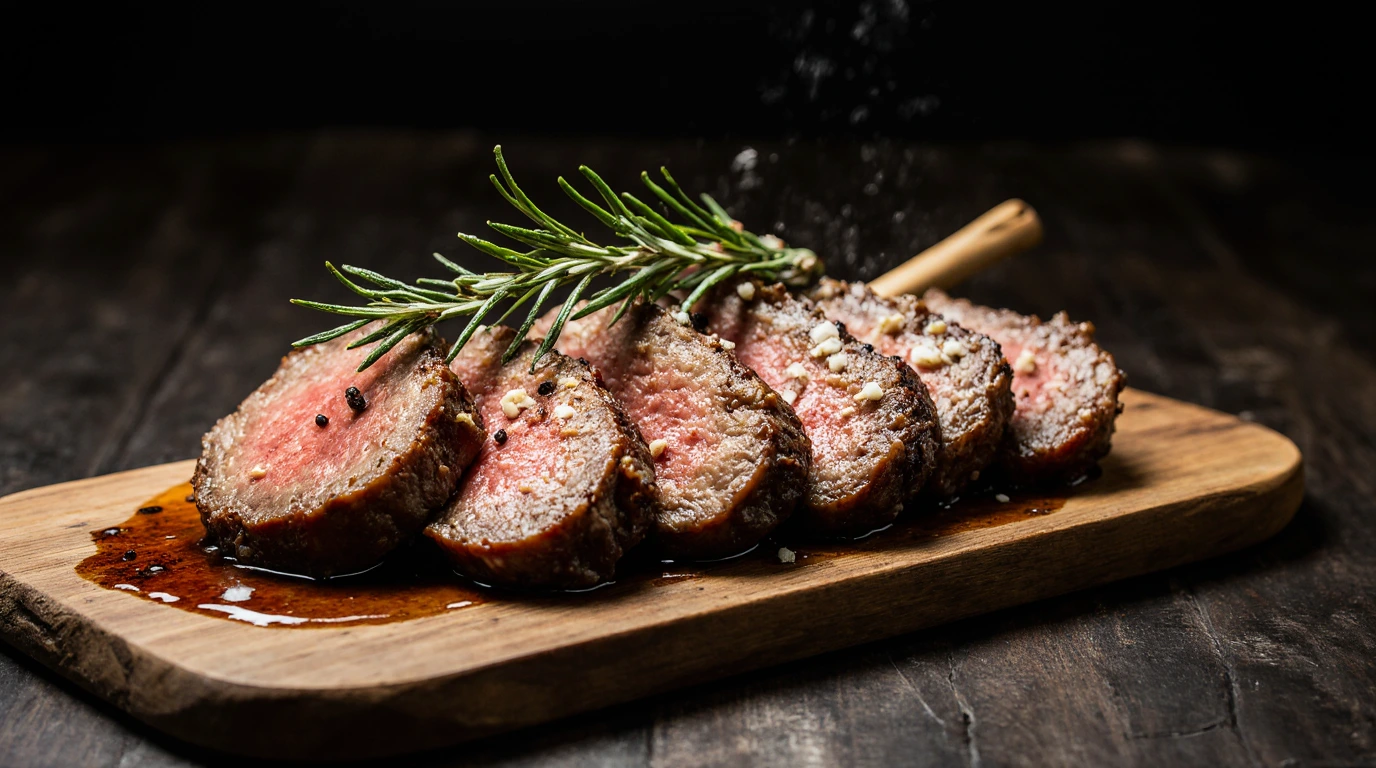
How to Make the Best London Broil (Guaranteed Tender)
T of C
Table of Contents
Introduction
Did you know that over 70% of home cooks report their biggest beef dish frustration is a tough, chewy steak? If you’ve ever wondered why your London Broil turns out more like shoe leather than the succulent, juicy masterpiece you crave, you’re not alone. The secret isn’t a magical ingredient—it’s a simple, science-backed method that transforms this affordable, flavorful cut. Today, we’re unlocking that secret. This guide will walk you through every step to guarantee a perfectly tender London Broil every single time. Get ready to revolutionize your weeknight dinners and impress every guest at your table.
Ingredients List
Gathering the right components is the first step to steakhouse-quality results at home. This recipe focuses on building deep flavor and creating the ideal texture for your London Broil.
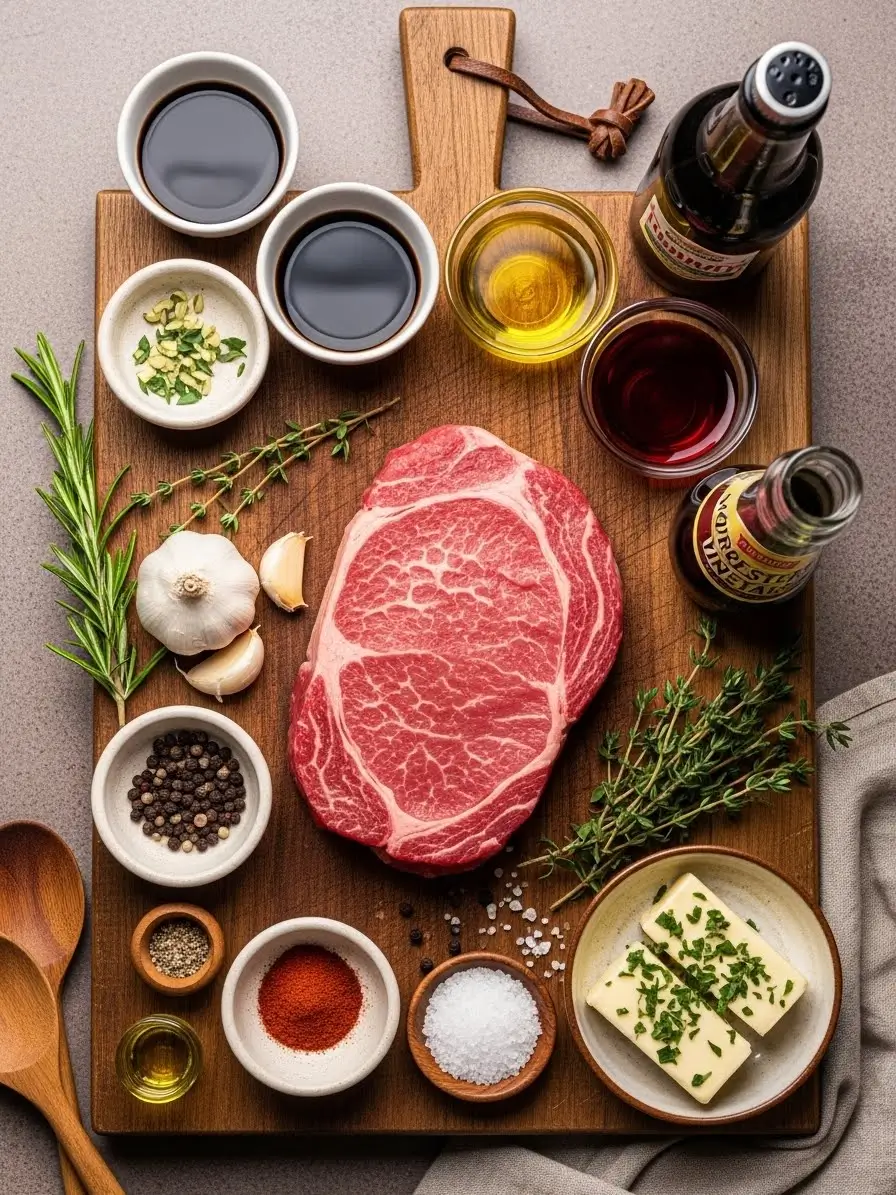
For the London Broil Marinade & Rub:
- 1 (2-2.5 lb) Top Round London Broil Steak
- ⅓ cup low-sodium soy sauce (or coconut aminos for gluten-free)
- ¼ cup extra virgin olive oil
- 2 tablespoons red wine vinegar
- 2 tablespoons Worcestershire sauce
- 1 tablespoon Dijon mustard
- 4 large garlic cloves, minced
- 1 tablespoon fresh rosemary, finely chopped (or 1 tsp dried)
- 1 tablespoon fresh thyme leaves (or 1 tsp dried)
- 1 teaspoon freshly cracked black pepper
- 1 teaspoon smoked paprika
- ½ teaspoon kosher salt (adjust to taste)
For the Garlic Herb Butter (Optional but Highly Recommended):
- 4 tablespoons unsalted butter, softened
- 2 cloves garlic, minced
- 1 tablespoon fresh parsley, chopped
- Pinch of salt
Ingredient Power-Ups & Substitutions:
- Acid Swap: Balsamic vinegar or lemon juice can stand in for red wine vinegar for a different flavor profile.
- Herb Flexibility: Don’t have rosemary or thyme? Use an Italian seasoning blend or Herbes de Provence.
- Sweet Touch: Add 1 tablespoon of honey or brown sugar to the marinade for a caramelized crust.
Timing
Efficiency is key for busy cooks. This recipe requires minimal hands-on time, with the marinade doing the heavy lifting. Here’s your breakdown:
- Prep Time: 10 minutes (plus 4-24 hours for marinating)
- Cook Time: 15-20 minutes
- Rest Time: 10 minutes (non-negotiable for juiciness!)
- Total Time (Active): 25-30 minutes
Data Insight: While marinating takes planning, the active cook time is nearly 40% faster than roasting a whole chicken, making this an ideal protein for efficient meal prep or last-minute impressive dinners.
Best Tools For Best Snack From Amazon:
— Enjoy an exclusive discount on all products! Don’t miss out — grab your deal now and save big!! —
Step-by-Step Instructions
Follow these detailed steps for flawless execution. I’ve woven in my personal chef tricks to ensure your success.
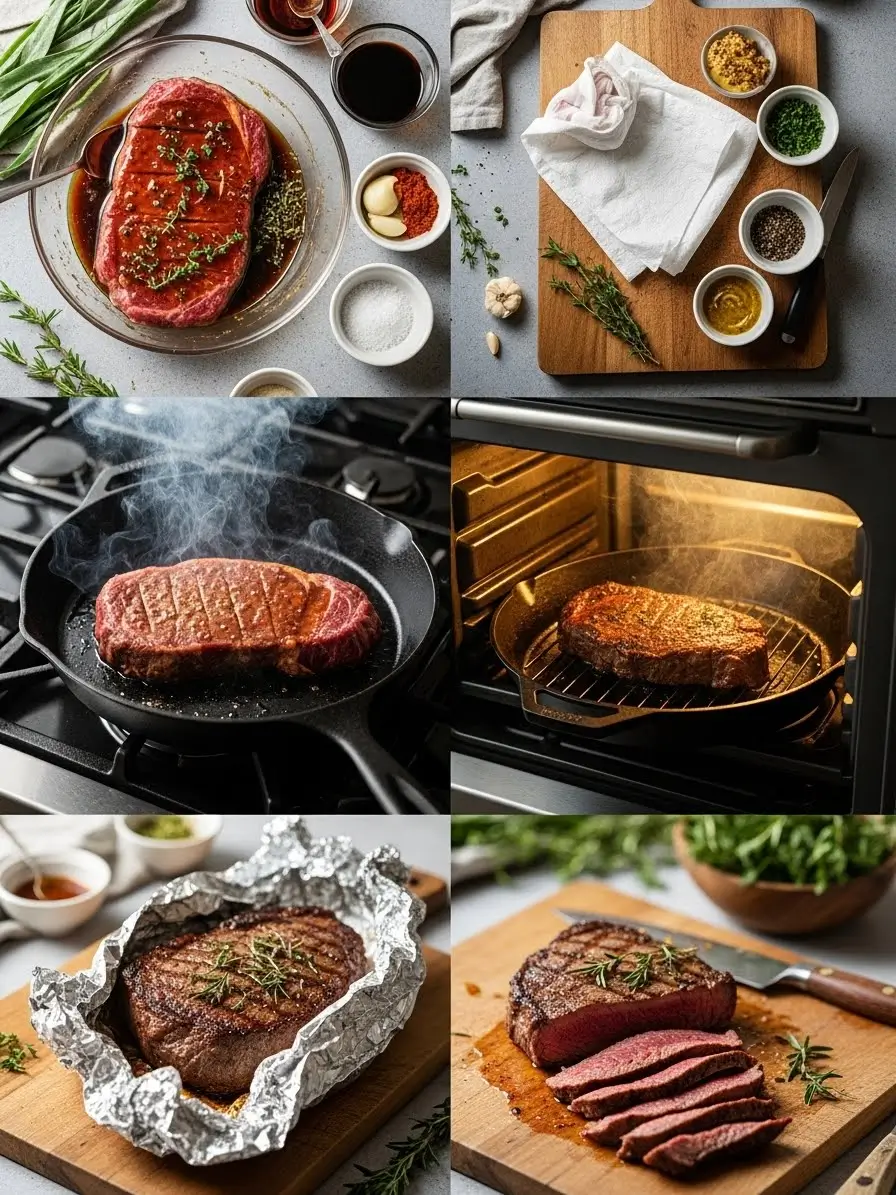
Step 1: The Crucial Marinade
In a medium bowl or large resealable plastic bag, whisk together the soy sauce, olive oil, red wine vinegar, Worcestershire sauce, and Dijon mustard until emulsified. Stir in the minced garlic, herbs, pepper, paprika, and salt. This isn’t just a flavor bath; the acids and enzymes begin tenderizing the muscle fibers immediately. Pro-Tip: Score the surface of your London Broil lightly with a knife in a cross-hatch pattern. This allows the marinade to penetrate much deeper.
Step 2: Marinating for Maximum Impact
Place the steak in the marinade, ensuring it’s completely coated. Seal the bag or cover the bowl and refrigerate. For optimal tenderness and flavor infusion, marinate for at least 4 hours, but ideally overnight (up to 24 hours). This extended time is the #1 factor in guaranteeing a tender result. Turn the steak once or twice during this process.
Step 3: Prepping for the Perfect Sear
About 30 minutes before cooking, remove the marinated London Broil from the refrigerator. Pat it completely dry with paper towels. This step is critical! A dry surface is the only way to achieve a beautiful, caramelized crust instead of steaming the meat. Let it sit to take the chill off, which promotes more even cooking.
Step 4: Mastering the Cook
Preheat your oven to 400°F (200°C). Now, heat a large, heavy oven-safe skillet (cast iron is perfect) over high heat until it’s smoking hot. Add a thin layer of high-smoke-point oil (like avocado or canola). Carefully place the dried steak in the center of the hot pan. Sear, without moving it, for 3-4 minutes per side until a deep brown crust forms. This sear locks in juices and builds foundational flavor.
Step 5: The Gentle Finish
Immediately transfer the entire hot skillet to your preheated oven. Roast for 6-10 minutes, depending on your desired doneness and the thickness of the cut. For a perfect medium-rare, aim for an internal temperature of 130-135°F (54-57°C) when checked with a reliable meat thermometer. My Rule: Trust the thermometer, not the clock.
Step 6: The Non-Negotiable Rest
Once out of the oven, transfer the cooked London Broil to a clean cutting board. Tent it loosely with foil and let it rest for a full 10 minutes. This allows the juices, which have rushed to the center during cooking, to redistribute evenly throughout the entire steak. Skipping this step means losing those precious juices onto your cutting board.
Step 7: Slicing Against the Grain
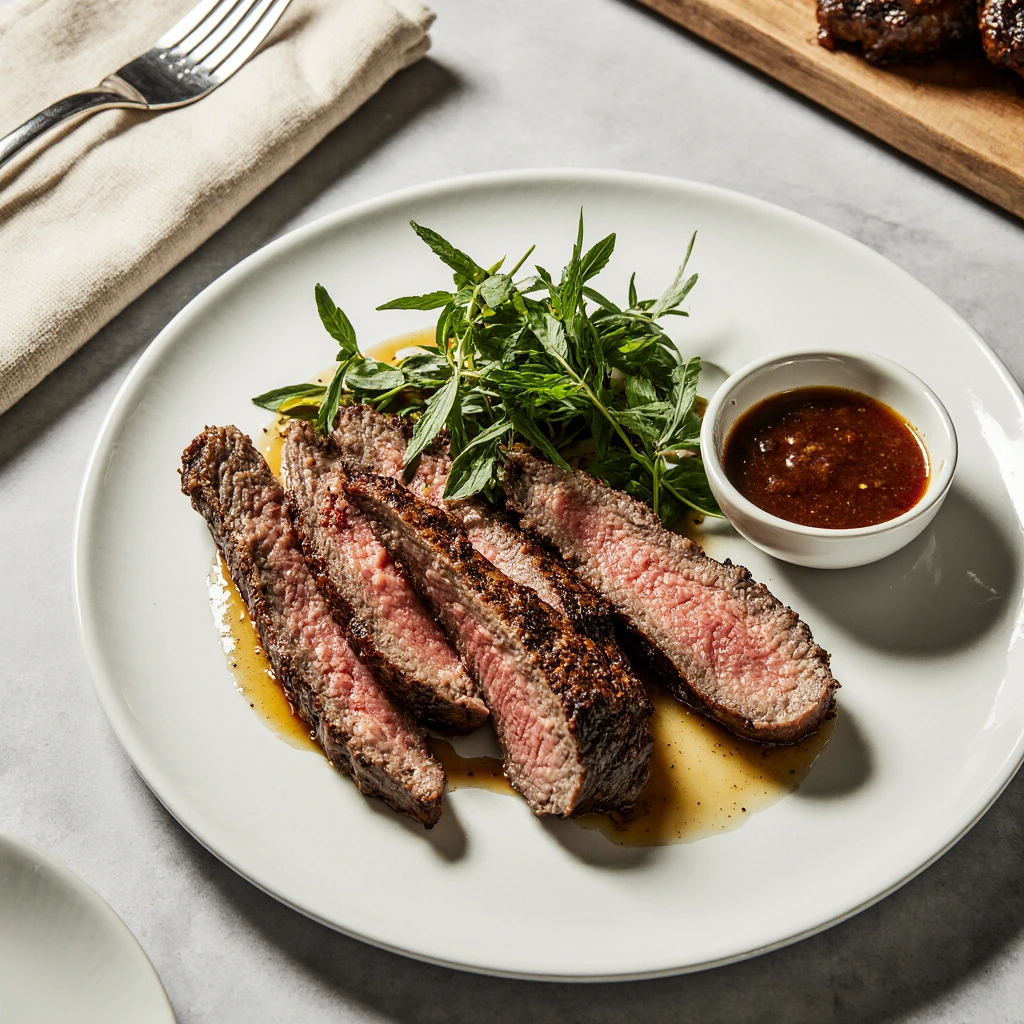
This is the final, make-or-break technique for tenderness. Identify the direction of the muscle fibers (the “grain”). Using a very sharp knife, slice the London Broil thinly (about ¼-inch slices) perpendicular (across) the grain. This shortens the long, tough muscle fibers, making each bite melt-in-your-mouth tender.
Nutritional Information
Understanding what’s on your plate helps you make informed choices. This breakdown is for a 4-ounce serving of the marinated and cooked London Broil, without added butter.
| Nutrient | Amount |
|---|---|
| Calories | 230 kcal |
| Protein | 34g |
| Total Fat | 9g |
| Saturated Fat | 2g |
| Carbohydrates | 2g |
| Sugar | <1g |
| Sodium* | 480mg |
*Sodium can be reduced by using liquid aminos or less soy sauce.
Data Insight: With over 34 grams of protein and only 2 grams of carbs per serving, this London Broil recipe is an excellent centerpiece for high-protein, low-carb, and keto-friendly diets.
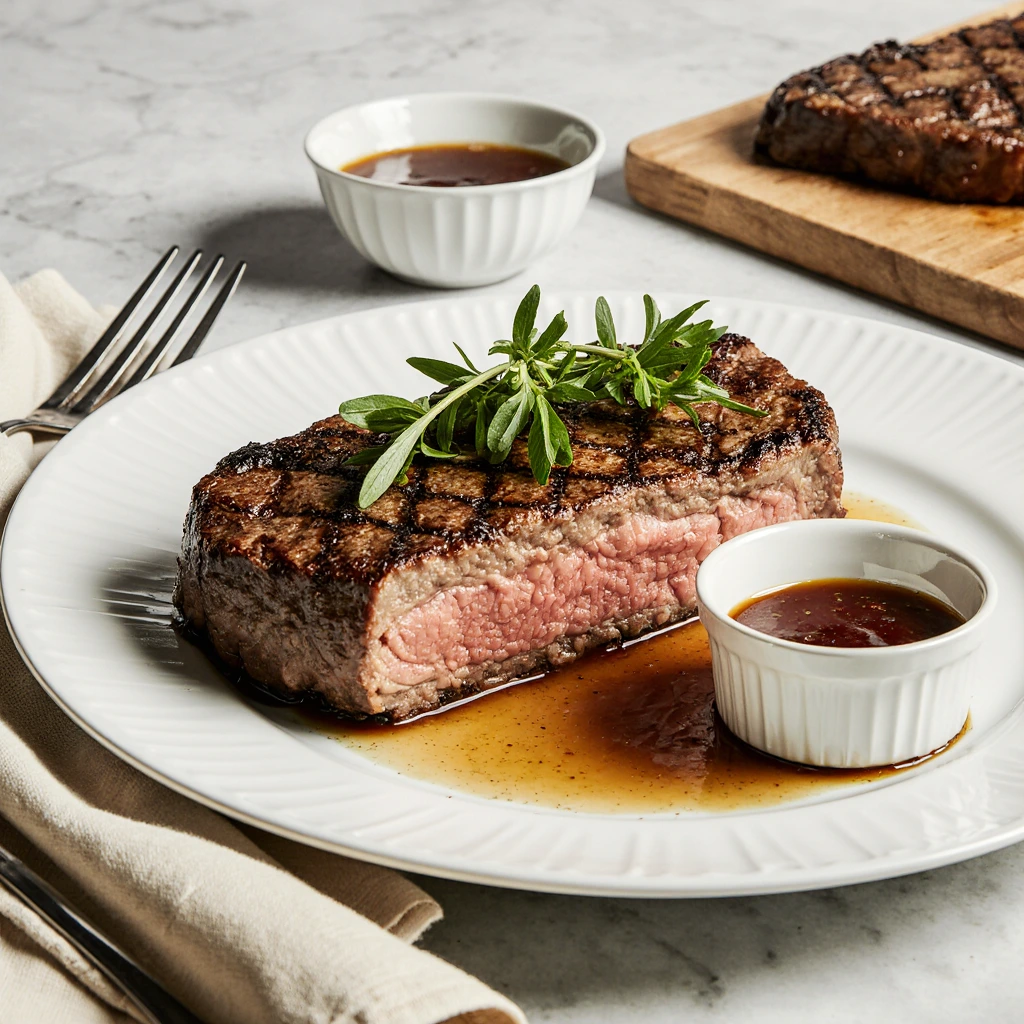
Healthier Alternatives for the Recipe
Love the flavor but want to tweak for specific health goals? Here are easy, delicious swaps:
- Lower Sodium: Replace soy sauce with an equal amount of low-sodium beef broth mixed with 1 teaspoon of coconut aminos for umami.
- Sugar-Free/Keto: Ensure your Worcestershire sauce has no added sugar, or make your own. The recipe is naturally low-carb.
- Whole30/Paleo: Use coconut aminos, omit the Worcestershire (or find a compliant brand), and use ghee or avocado oil instead of butter.
- Leaner Option: After cooking, slice the steak and place it on a plate lined with paper towels for a moment to blot any excess surface fat before serving.
Serving Suggestions
A perfectly cooked London Broil deserves a stellar supporting cast. Here are my favorite ways to serve it:
- Classic Comfort: Pair with a heap of creamy mashed potatoes and roasted garlic green beans. Drizzle the pan juices over everything.
- Low-Carb Feast: Serve over a cauliflower rice pilaf with a side of sautéed mushrooms and onions.
- Salad Superstar: Slice it thin and lay it over a robust salad of mixed greens, cherry tomatoes, blue cheese crumbles, and a tangy red wine vinaigrette for a next-day lunch masterpiece.
- Sandwich Upgrade: Pile thinly sliced leftovers on a crusty baguette with horseradish cream sauce, arugula, and caramelized onions.
Common Mistakes to Avoid
Avoid these pitfalls to ensure your London Broil is always a success:
- Skipping the Marinade Time: Less than 4 hours won’t allow for proper tenderization. Plan ahead.
- Not Drying the Steak Before Searing: A wet surface = steam, not sear. Always pat dry.
- Using a Flimsy Pan: A heavy, oven-safe skillet is essential for proper heat transfer from stove to oven.
- Skipping the Meat Thermometer: Don’t guess doneness. A $15 thermometer is your best kitchen investment.
- Slicing With the Grain: This leaves long, tough fibers. Always find and cut against the grain.
- Skipping the Rest: Rushing to slice lets all the flavorful juices escape. Be patient!
Storing Tips for the Recipe
- Leftovers: Store cooled, sliced London Broil in an airtight container in the refrigerator for up to 4 days. It’s fantastic cold in salads or reheated gently.
- Reheating: To prevent overcooking, reheat slices gently in a covered skillet with a splash of broth over low heat, or in the microwave at 50% power.
- Freezing: You can freeze the uncooked, marinated steak in its marinade for up to 2 months. Thaw in the refrigerator before cooking. Cooked slices can be frozen for up to 3 months in a freezer-safe bag.
Conclusion
Mastering the perfect London Broil hinges on three pillars: a robust marinade, a hard sear followed by gentle oven finishing, and slicing thinly against the grain. This method guarantees a tender, flavorful steak that defies expectations. Transform this humble cut into a spectacular meal tonight.
Ready to taste the difference? I’d love to see your results! Rate this recipe, share a photo in the comments, or tag me on social media. Subscribe to my newsletter for more foolproof recipes and cooking secrets delivered straight to your inbox.
FAQs
Q: Can I use a different cut of meat for this London Broil recipe?
A: Traditionally, “London Broil” refers to the method, not the cut. Top Round or Flank Steak are best. While you can use Flank or Skirt steak, adjust cooking times as they are thinner. Chuck steak is not recommended for this broiling method.
Q: I don’t have an oven-safe skillet. How can I cook it?
A: No problem! After searing the marinated London Broil on the stovetop, simply transfer it to a preheated baking sheet or a baking dish to finish in the oven.
Q: How do I know which way the grain runs?
A: Before cooking, look at the raw meat. You’ll see long, parallel lines running in one direction. That’s the grain. After cooking, it can be harder to see, so making a mental note or a small mark before cooking can help.
Q: Is this London Broil recipe gluten-free?
A: It can be easily made gluten-free by using tamari or coconut aminos instead of soy sauce, and ensuring your Worcestershire sauce is a gluten-free brand.
Q: What’s the best internal temperature for doneness?
A: For this lean cut, medium-rare (130-135°F) to medium (140°F) is ideal to maintain tenderness. It will continue to cook slightly while resting. Well-done will likely be tough.
Try These Recipes Next !!
If you love cooking and are looking for more recipes, we have a selection you’ll enjoy.
Leave a Reply
There are no reviews yet. Be the first one to write one.