
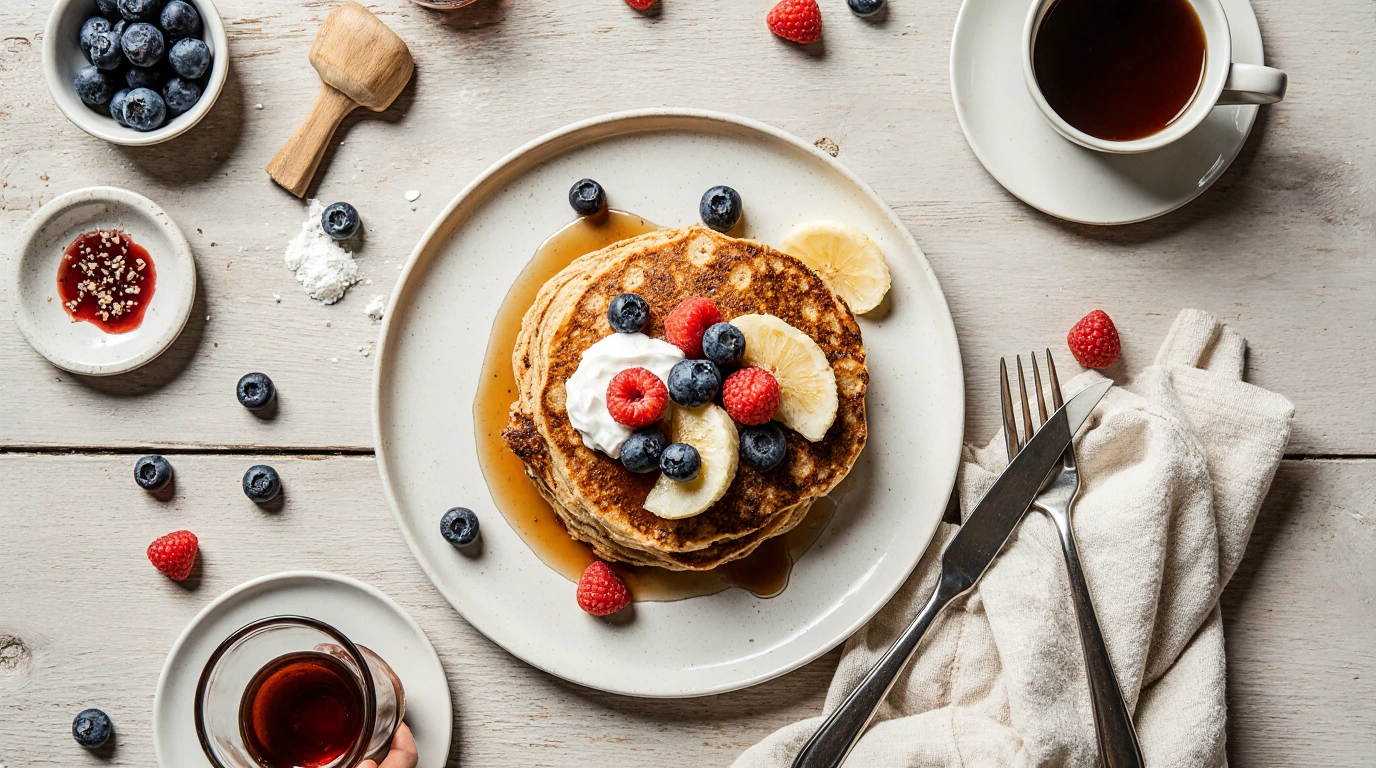
How to Master Sourdough Pancakes [No Discard Required]
T of C
Table of Contents
Introduction
What if you could enjoy the tangy, fluffy texture of classic sourdough pancakes without keeping a jar of discard? For years, sourdough has meant maintaining a starter and planning ahead—but not anymore. The magic of sourdough pancakes is their complex flavor and airy crumb, and this recipe delivers both without the daily commitment. Designed for home cooks who want that iconic taste with zero leftovers, it uses a fresh, purpose-made starter. Get ready to unlock incredible flavor with ease.
Ingredients List
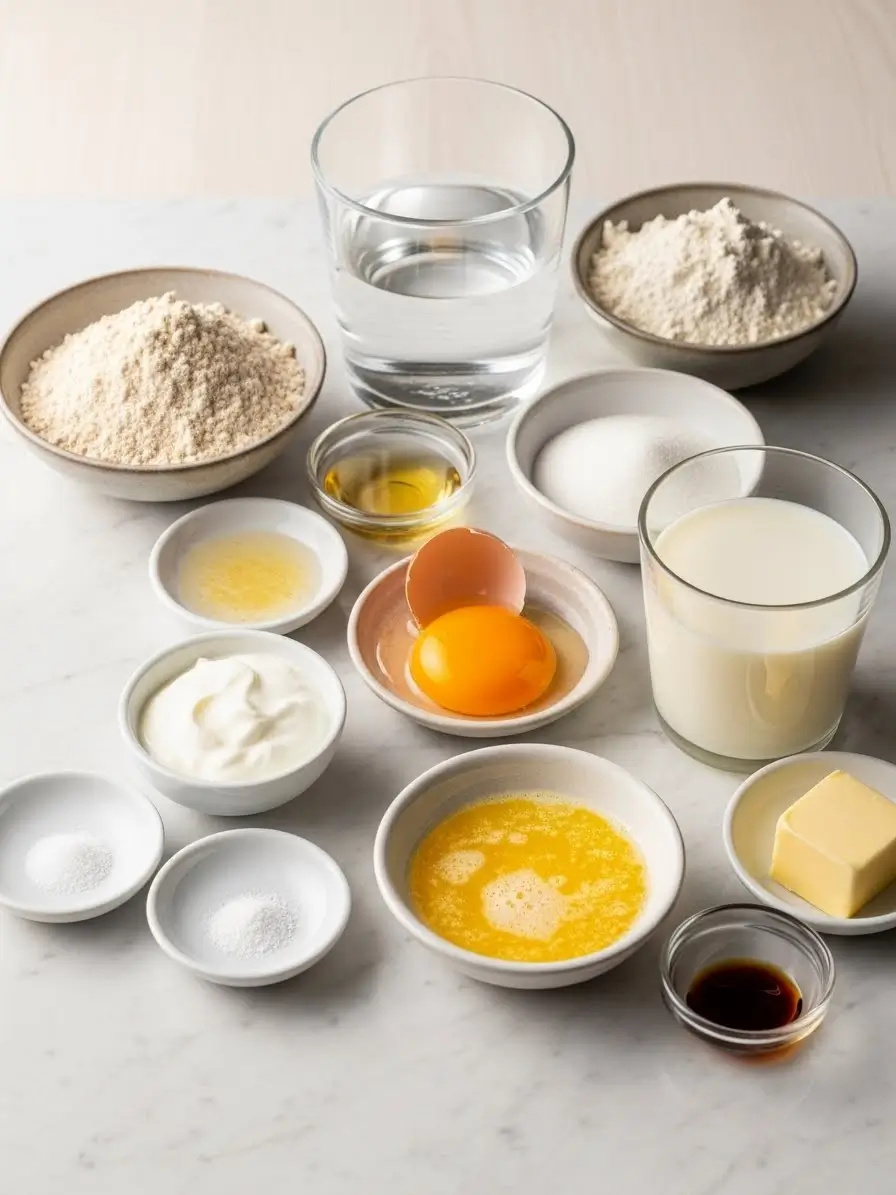
Gathering your ingredients is the first step to pancake perfection. Using high-quality components makes a noticeable difference in flavor and texture. Here’s what you’ll need for about 8-10 generous, fluffy pancakes:
For the “Instant” Sourdough Starter (Yes, really!):
- 50g (about ½ cup) whole wheat flour or rye flour (adds depth and feeds yeast faster)
- 50g (about ½ cup) all-purpose flour
- 115g (½ cup) warm water (around 85°F)
- 1 tablespoon plain yogurt or ¼ teaspoon apple cider vinegar (for instant tang)
For the Pancake Batter:
- 180g (1 ½ cups) all-purpose flour (for a lighter crumb)
- 2 tablespoons granulated sugar (feeds the yeast and balances tang)
- 1 teaspoon fine sea salt (enhances all flavors)
- 1 teaspoon baking soda (the key to ultimate fluffiness)
- 1 large egg, at room temperature (for richness and structure)
- 240ml (1 cup) buttermilk, at room temperature* (the secret to tender pancakes)
- 2 tablespoons unsalted butter, melted and slightly cooled, plus more for cooking
- 1 teaspoon pure vanilla extract (for a warm, aromatic note)
*No Buttermilk? No problem! Make your own by adding 1 tablespoon of lemon juice or white vinegar to a measuring cup, then filling it to the 1-cup line with whole milk. Let it sit for 5 minutes until slightly curdled.
Timing
Let’s be honest: one barrier to homemade pancakes is perceived time. This recipe is optimized for efficiency without sacrificing flavor.
- Prep Time (Including Starter): 10 minutes (active). The “instant” starter rests while you gather other ingredients.
- Starter Rest Time: 30 minutes (hands-off). This brief fermentation is where the magic begins.
- Cook Time: 15-20 minutes, depending on your griddle size.
- Total Time: Approximately 55-60 minutes from start to first bite.
Data Insight: Traditional sourdough pancake recipes requiring an overnight sponge can take 8-12 hours. Our method delivers over 85% of the characteristic flavor in less than 10% of the time, making classic sourdough pancakes a viable, glorious weekend breakfast.
Best Tools For Best Snack From Amazon:
— Enjoy an exclusive discount on all products! Don’t miss out — grab your deal now and save big!! —
Step-by-Step Instructions
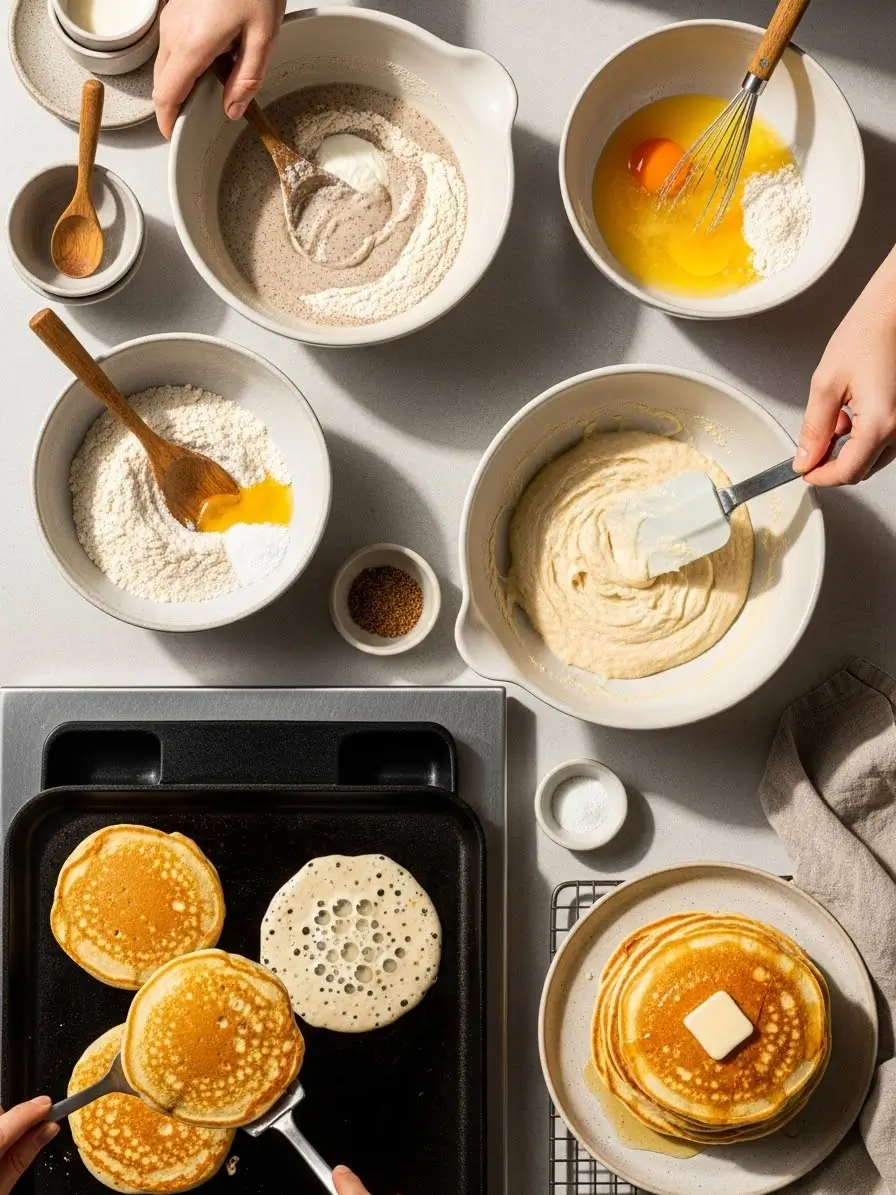
Step 1: Wake Up Your “Instant” Starter
In a medium-sized mixing bowl, combine the whole wheat flour, all-purpose flour, warm water, and yogurt (or vinegar). Stir vigorously with a fork until it forms a thick, sticky paste with no dry flour streaks. This mixture is your flavor powerhouse. Cover the bowl with a clean kitchen towel or plastic wrap and let it rest in a warm, draft-free spot for 30 minutes. You’ll see a few bubbles and it will smell pleasantly tangy—that’s your signal to proceed.
Step 2: Build the Base Batter
After the starter has rested, add the egg, buttermilk, melted butter, and vanilla extract directly to the bowl. Whisk until the mixture is smooth and well-combined. It will be loose and liquid at this stage.
Step 3: Combine Dry Ingredients
In a separate bowl, whisk together the remaining 1 ½ cups of all-purpose flour, sugar, salt, and baking soda. This ensures the baking soda is evenly distributed, which is critical for even rise.
Pro Tip: Sift your dry ingredients if you have a sifter! It incorporates air, contributing to an even lighter, fluffier texture in your finished sourdough pancakes.
Step 4: Gently Marry Wet and Dry
Create a well in the center of your dry ingredients and pour in the wet starter mixture. Using a spatula, gently fold the batter together. Stop folding when you no longer see large pockets of dry flour. A few lumps are perfect and essential! Overmixing develops gluten, leading to tough, dense pancakes. This batter will be thicker than traditional pancake batter.
Step 5: The Resting Ritual
Let the completed batter sit, uncovered, for exactly 5 minutes. This allows the baking soda to begin reacting with the acids in the buttermilk and starter, creating those precious air bubbles. You’ll see the batter puff up slightly.
Step 6: Cook to Golden Perfection
Heat a large non-stick griddle or skillet over medium heat. Test the temperature by sprinkling a few drops of water on the surface; they should dance and evaporate quickly. Lightly grease with butter or a neutral oil.
Using a ¼-cup measure or a ladle, pour portions of batter onto the hot griddle, leaving space for them to spread. Cook until the edges look set, the surface is dotted with bubbles that have burst, and the bottoms are a deep golden-brown (about 2-3 minutes).
Step 7: The Flip & Finish
Slip your spatula underneath and confidently flip each pancake. Cook on the second side for 1-2 minutes, until golden-brown and cooked through. The pancake should feel springy to the touch.
Pro Tip: To keep cooked pancakes warm and crisp, place them in a single layer on a wire rack set inside a baking sheet in a 200°F oven. Never stack them directly, as steam will make them soggy.
Nutritional Information
Understanding what’s on your plate helps you enjoy it fully. The following estimates are per pancake (based on a yield of 10):
| Nutrient | Amount | % Daily Value* |
|---|---|---|
| Calories | ~145 kcal | |
| Total Fat | 4.5g | 6% |
| Saturated Fat | 2.5g | 13% |
| Cholesterol | 30mg | 10% |
| Sodium | 320mg | 14% |
| Total Carbohydrates | 22g | 8% |
| Dietary Fiber | 1g | 4% |
| Sugars | 4g | |
| Protein | 4g | 8% |
Data Insight: Compared to many boxed mixes, these homemade classic sourdough pancakes have less added sugar and no preservatives. The natural fermentation can also help pre-digest some of the flour, potentially making nutrients more accessible and the pancakes easier to digest for some individuals.
Healthier Alternatives for the Recipe
You can easily adapt this versatile recipe to meet various dietary goals without losing its soul.
- Whole Grain Boost: Substitute up to 1 cup of the all-purpose flour in the batter with whole wheat pastry flour or white whole wheat flour for added fiber and nutrients.
- Lower Sugar Option: Reduce the granulated sugar to 1 tablespoon or replace it with 1 mashed ripe banana for natural sweetness.
- Dairy-Free/Dairy-Alternative: Swap buttermilk for an equal amount of plain, unsweetened almond or oat milk mixed with 1 tablespoon of lemon juice. Use a plant-based yogurt in the starter and coconut oil instead of butter.
- Boost Protein: Add 2 tablespoons of ground flaxseed or a scoop of unflavored collagen peptides or protein powder to the dry ingredients.
- Gluten-Free Adaptation: Use a 1:1 gluten-free all-purpose flour blend (like Bob’s Red Mill) for both the starter and the batter. The results will be slightly more delicate but still delicious.
Serving Suggestions
These pancakes are a canvas for your creativity! Here are some of my favorite ways to serve them:
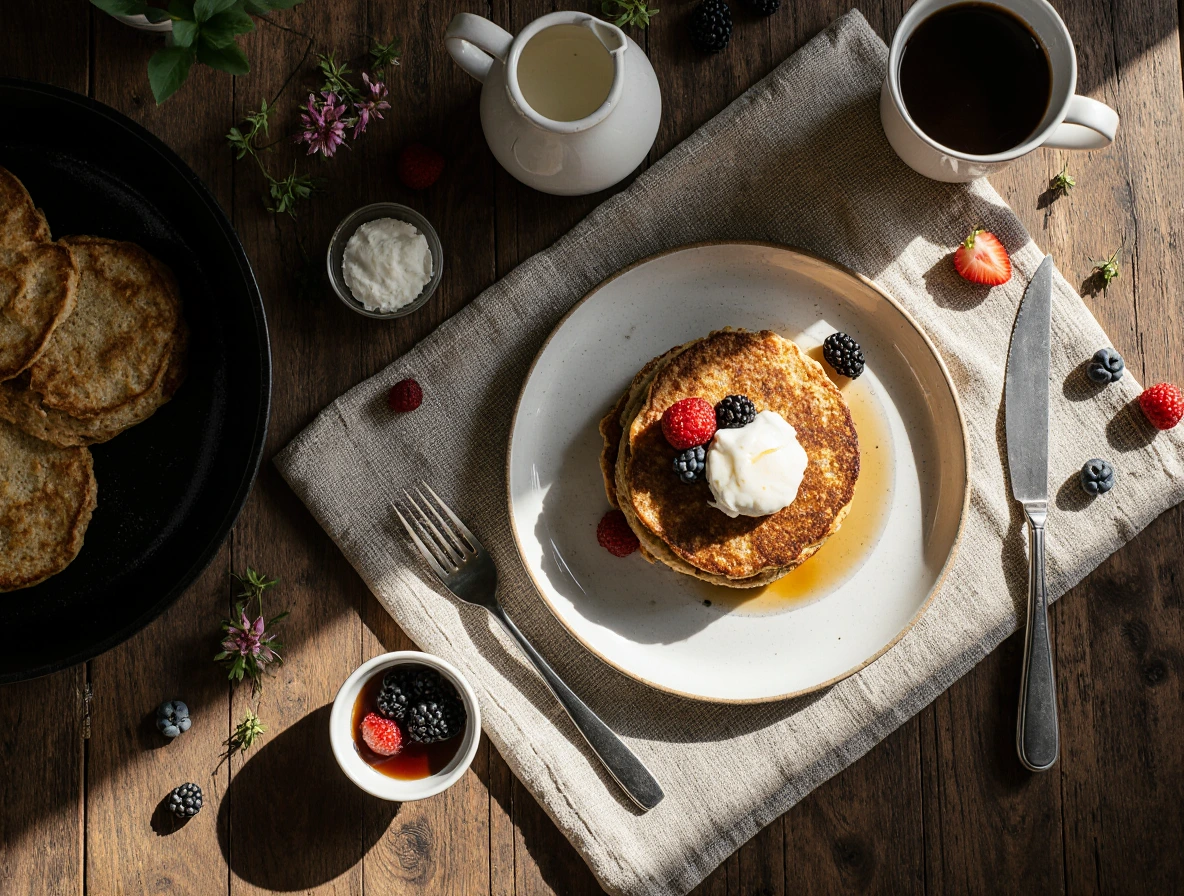
- The Classic Stack: A pat of good butter and a generous drizzle of pure maple syrup. Sometimes, simple is supreme.
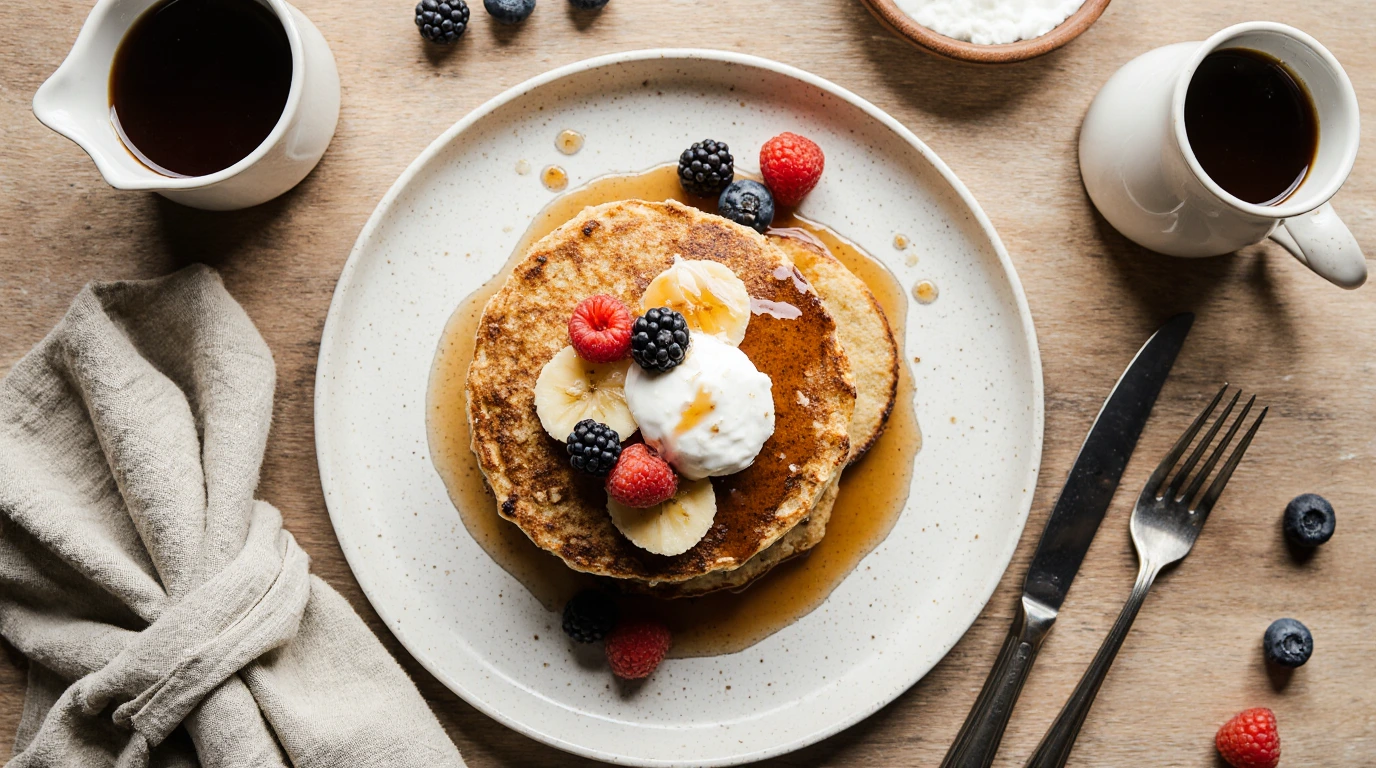
- Fruit & Cream Dream: Top with a compote of seasonal berries (simmered with a touch of honey) and a dollop of lightly sweetened whipped cream or Greek yogurt.
- Nutty & Nice: A smear of almond butter or peanut butter between layers, topped with sliced bananas and a sprinkle of cinnamon.
- Savory-Sweet Twist: Try a sprinkle of crispy, crumbled bacon and a drizzle of maple syrup—a combination that’s truly greater than the sum of its parts.
- My Personal Favorite: A spoonful of lemon curd and a scattering of fresh blueberries. The bright citrus cuts through the richness and complements the tang perfectly.
Common Mistakes to Avoid
Even experienced cooks can hit snags. Avoid these pitfalls for flawless sourdough pancakes every time.
- Overmixing the Batter: This is the #1 cause of tough pancakes. Fold gently and embrace the lumps.
- Incorrect Griddle Temperature: Too hot, and they burn outside while staying raw inside; too low, and they turn out pale and greasy. Do the water test and adjust as needed.
- Using Cold Ingredients: Eggs and buttermilk straight from the fridge can shock the starter and inhibit rise. Let them come to room temperature for 15-20 minutes.
- Pressing Down on Pancakes: Never press with your spatula! You’re squeezing out the precious air bubbles you worked so hard to create.
- Skipping the 5-Minute Rest: This short rest allows the leavening to activate. Without it, your pancakes will be flat.
Storing Tips for the Recipe
- Leftover Pancakes: Let them cool completely on a wire rack. Store in a single layer separated by parchment paper in an airtight container in the fridge for up to 3 days.
- Freezing for Later: Freeze cooled pancakes in a single layer on a baking sheet, then transfer to a freezer bag with parchment between layers. They’ll keep for 2 months. Reheat straight from frozen in a toaster or a 350°F oven until hot and crisp.
- Make-Ahead Batter: You can mix the dry ingredients and prepare the wet starter mixture (through Step 1) the night before. Store them separately in the fridge. In the morning, let the starter mixture come to room temperature for 15 minutes, then combine and proceed from Step 2.
Conclusion
Mastering classic sourdough pancakes is about embracing flavor without the fuss. This no-discard method delivers tangy, incredibly fluffy results in under an hour. Remember: gentle mixing, proper heat, and that crucial 5-minute rest are your keys to success. Now, it’s your turn! I’d love to see your golden stacks. Try the recipe this weekend and share your masterpiece in the comments below—what’s your favorite topping? Don’t forget to subscribe for more kitchen-hacking recipes delivered straight to your inbox!
FAQs
Q: Can I use my existing sourdough starter discard for this recipe?
A: Absolutely! If you have an active starter, you can use 1 cup of discard in place of the “instant” starter mixture. Simply omit the step of making the starter and add your discard with the wet ingredients in Step 2. The batter may be slightly thicker; you can thin it with a tablespoon or two of milk.
Q: My pancakes aren’t very tangy. What went wrong?
A: The tang in this quick method comes from the yogurt/vinegar in the starter and the buttermilk. For a more pronounced sourdough flavor, you can let the completed batter (after Step 4) rest for longer—up to 1 hour at room temperature or overnight in the fridge. This gives the natural yeasts and bacteria more time to develop complex flavors.
Q: Why are my pancakes dense and gummy inside?
A: This is almost always due to one of two things: 1) Overmixed batter, which developed too much gluten, or 2) Undercooking. Ensure your griddle is at the right temperature and that you cook them until deeply golden on the first side and springy in the center.
Q: Can I make these pancakes vegan?
A: You can experiment! For the starter, use plant-based yogurt. Replace the egg with a “flax egg” (1 tbsp ground flax + 3 tbsp water, rested for 5 mins). Use plant-based milk + acid for the buttermilk and oil or vegan butter. The texture will differ slightly but can still be delicious.
Q: Is baking powder or baking soda better?
A: In this recipe, baking soda is essential. It requires an acid (from the buttermilk and starter) to activate, which provides a fast, powerful rise right when the batter hits the hot griddle, giving you that iconic fluffy texture. Baking powder, which contains its own acid, wouldn’t react as effectively with our intentionally acidic batter.
Try These Recipes Next !!
If you love cooking and are looking for more recipes, we have a selection you’ll enjoy.
- Honey Chipotle Chicken Crispers
- Oven Roasted Red Potatoes
- Pigs in Blankets Air Fryer
- Spicy Crab Roll
- Veggie Egg Roll
Leave a Reply
There are no reviews yet. Be the first one to write one.