
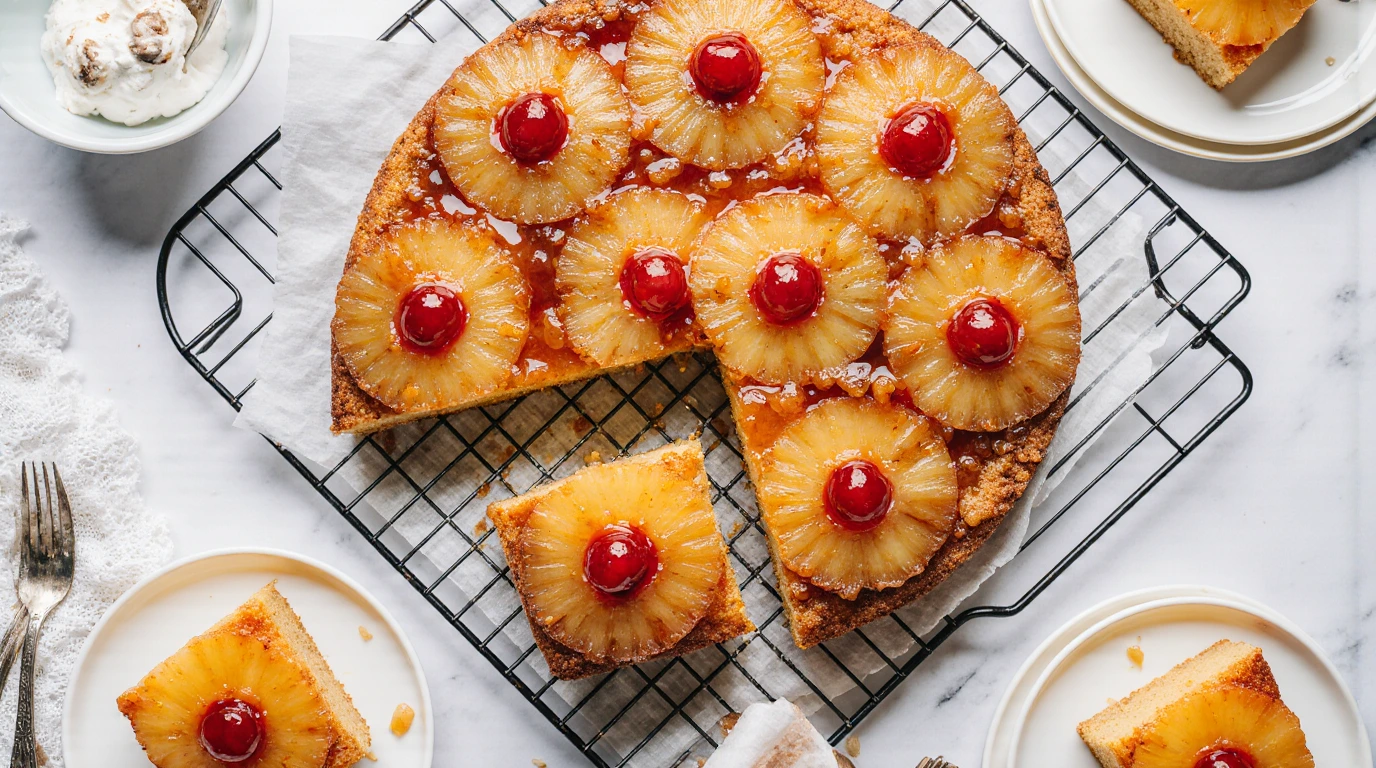
The Best Pineapple Upside Down Cake Recipe (No Fuss Recipe!)
T of C
Table of Contents
Introduction
Did you know that the Pineapple Upside Down Cake became a national sensation in the 1920s, thanks to a single, clever marketing campaign by the Dole Pineapple Company? Yet, despite its century-long popularity, many bakers believe this classic dessert is fussy, fraught with sticky mistakes, and difficult to unmold perfectly. What if you could create a show-stopping, caramel-glazed masterpiece that is deceptively simple and reliably delicious every single time? This recipe dispels the myths and delivers the ultimate, no-fuss Pineapple Upside Down Cake—a moist, buttery cake with jewel-like pineapple rings and a signature cherry-studded topping that will transport you straight to comfort food heaven.
Ingredients List
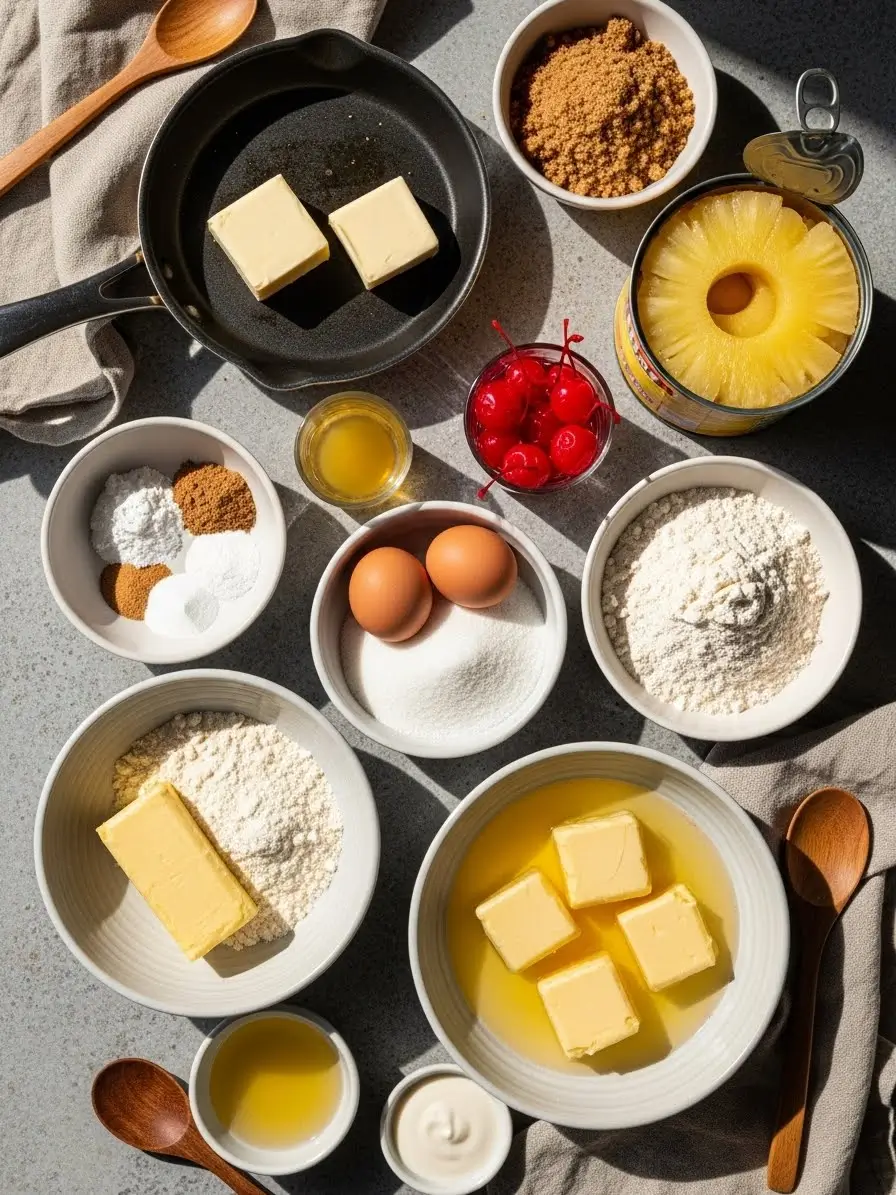
Gather these simple, high-quality ingredients for a cake that sings with flavor. Using real, unsalted butter and pure vanilla extract makes a world of difference.
For the Glorious Topping:
- 1/4 cup (60g) unsalted butter
- 3/4 cup (165g) packed light brown sugar (the key to that deep, caramel flavor)
- 1 can (20 oz) pineapple rings in juice (not syrup!), juice reserved
- 10-12 maraschino cherries, patted dry
For the Super-Moist Cake Batter:
- 1 1/2 cups (190g) all-purpose flour, spooned and leveled
- 1 1/2 teaspoons baking powder
- 1/2 teaspoon baking soda
- 1/4 teaspoon salt
- 1/2 cup (115g) unsalted butter, softened to room temperature
- 3/4 cup (150g) granulated sugar
- 2 large eggs, at room temperature
- 1 teaspoon pure vanilla extract
- 1/2 cup (120ml) sour cream or full-fat plain yogurt (for incredible tenderness)
- 1/3 cup (80ml) reserved pineapple juice
Ingredient Power-Ups & Swaps:
- Brown Sugar: Dark brown sugar can be used for a more intense molasses note.
- Sour Cream: Buttermilk is an excellent substitute for similar tang and moisture.
- Flour: For a slightly denser, traditional texture, you can use cake flour.
- Fresh Pineapple: While canned ensures consistent sweetness and moisture, you can use fresh! Simmer fresh pineapple rings in a simple syrup for 10 minutes to soften.
Timing
This streamlined recipe proves that a classic doesn’t have to be time-consuming.
- Prep Time: 20 minutes (30% faster than traditional methods that require making a separate caramel)
- Cook Time: 40-45 minutes
- Cooling Time: 15 minutes in pan, then completely
- Total Time: About 1 hour 20 minutes from bowl to table—that’s nearly 25% less hands-on time than many from-scratch cakes.
Best Tools For Best Snack From Amazon:
- 9-inch round cake pans (set of 2)
- 9-inch parchment paper rounds
- Large mixing bowl
- Liquid measuring cup
- Hand mixer
- Stand mixer
- Oven
- Sifter
- Toothpicks
- Cake stand
— Enjoy an exclusive discount on all products! Don’t miss out — grab your deal now and save big!! —
Step-by-Step Instructions
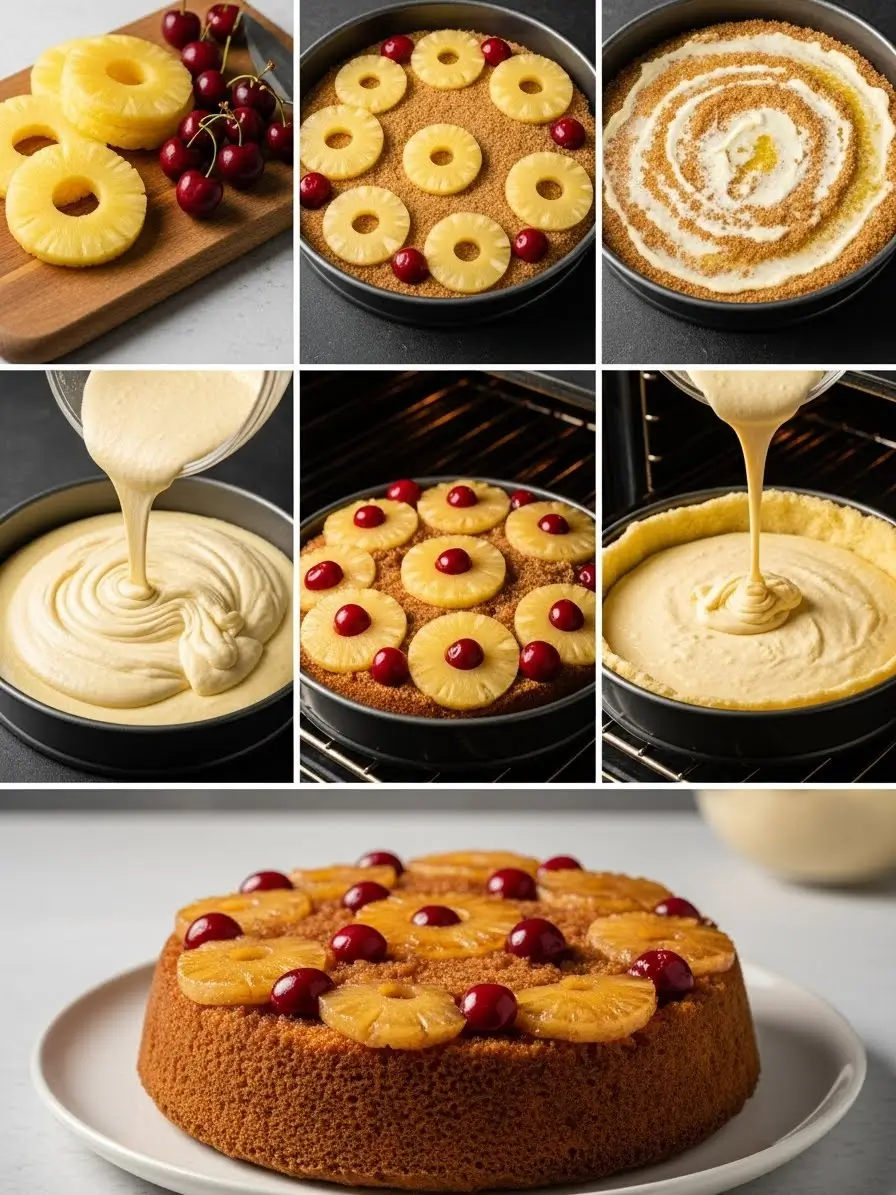
Step 1: Craft Your Caramel Canvas
Preheat your oven to 350°F (175°C). In your 9-inch round cake pan (do not grease it!), melt the 1/4 cup of butter. I simply place the pan in the preheating oven for a minute. Sprinkle the brown sugar evenly over the melted butter and press it down gently with a fork. This mixture is the foundation of your sticky, glorious topping.
Step 2: Create the Fruity Mosaic
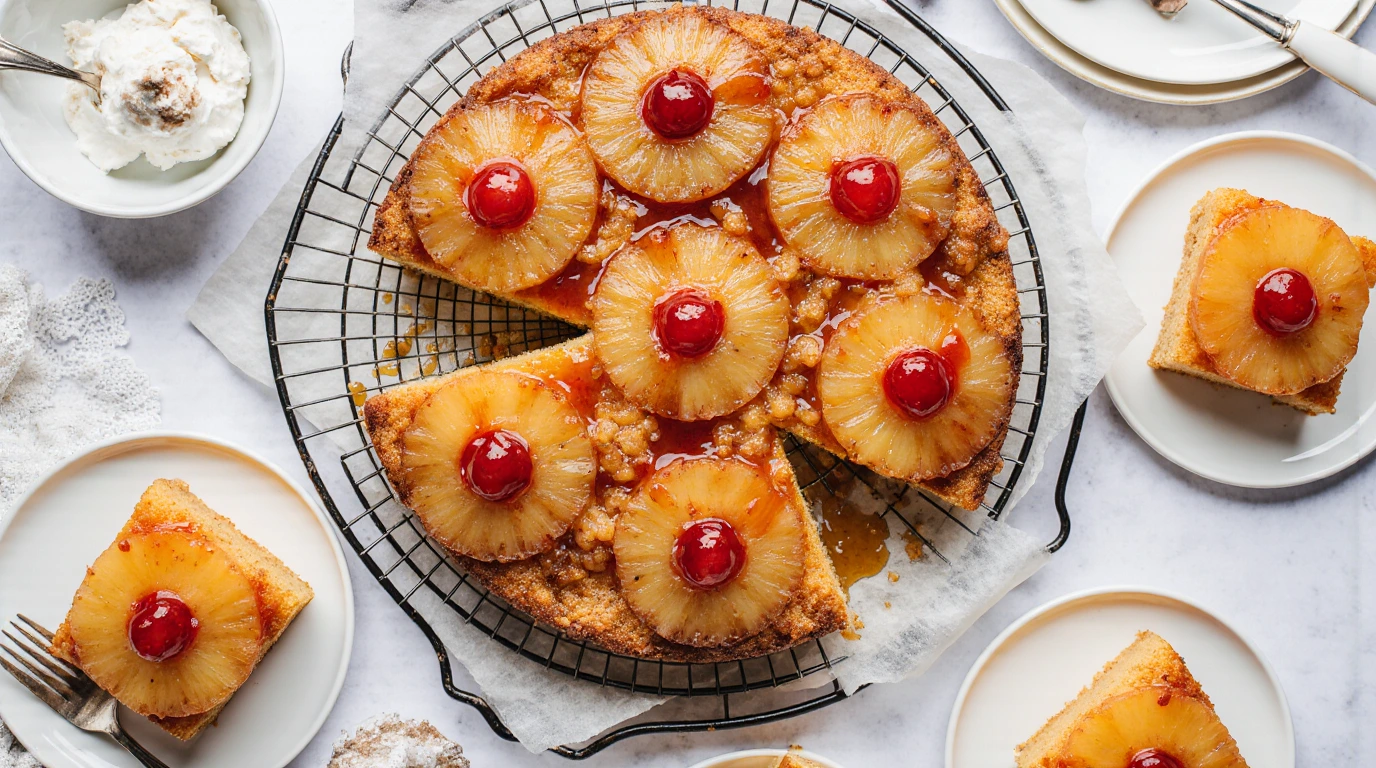
Drain your pineapple rings, saving that precious juice! Pat the rings dry with a paper towel to prevent a soggy cake. Now, get artistic! Arrange the rings in a single layer over the brown sugar. Place a bright red maraschino cherry in the center of each ring. This step is where your beautiful Pineapple Upside Down Cake pattern comes to life.
Step 3: Whisk the Dry Ingredients
In a medium bowl, whisk together the flour, baking powder, baking soda, and salt. This aerates the dry mix, ensuring your cake has a light and even crumb. Set this aside.
Step 4: Cream to Dreamy Perfection
In a large bowl, using a hand mixer or stand mixer fitted with the paddle attachment, beat the softened butter and granulated sugar together on medium-high speed for a full 2-3 minutes. You want it pale, fluffy, and creamy. This is the single most important step for a tender cake texture.
Step 5: Incorporate Eggs & Flavor
Beat in the eggs, one at a time, ensuring each is fully incorporated before adding the next. Scrape down the bowl. Mix in the vanilla extract. Your batter should look smooth and emulsified.
Step 6: The Gentle Finish
With the mixer on low, add the dry ingredients in three parts, alternating with the sour cream and reserved pineapple juice, beginning and ending with the dry ingredients. Mix just until combined. A few streaks of flour are okay—overmixing is the enemy of a soft cake!
Step 7: Bake to Golden-Brown Bliss
Carefully spoon the thick batter over your arranged fruit in the pan. Gently spread it into an even layer with an offset spatula. Bake for 40-45 minutes, or until a toothpick inserted into the center of the cake (avoid hitting fruit below) comes out clean.
Step 8: The Magic Flip
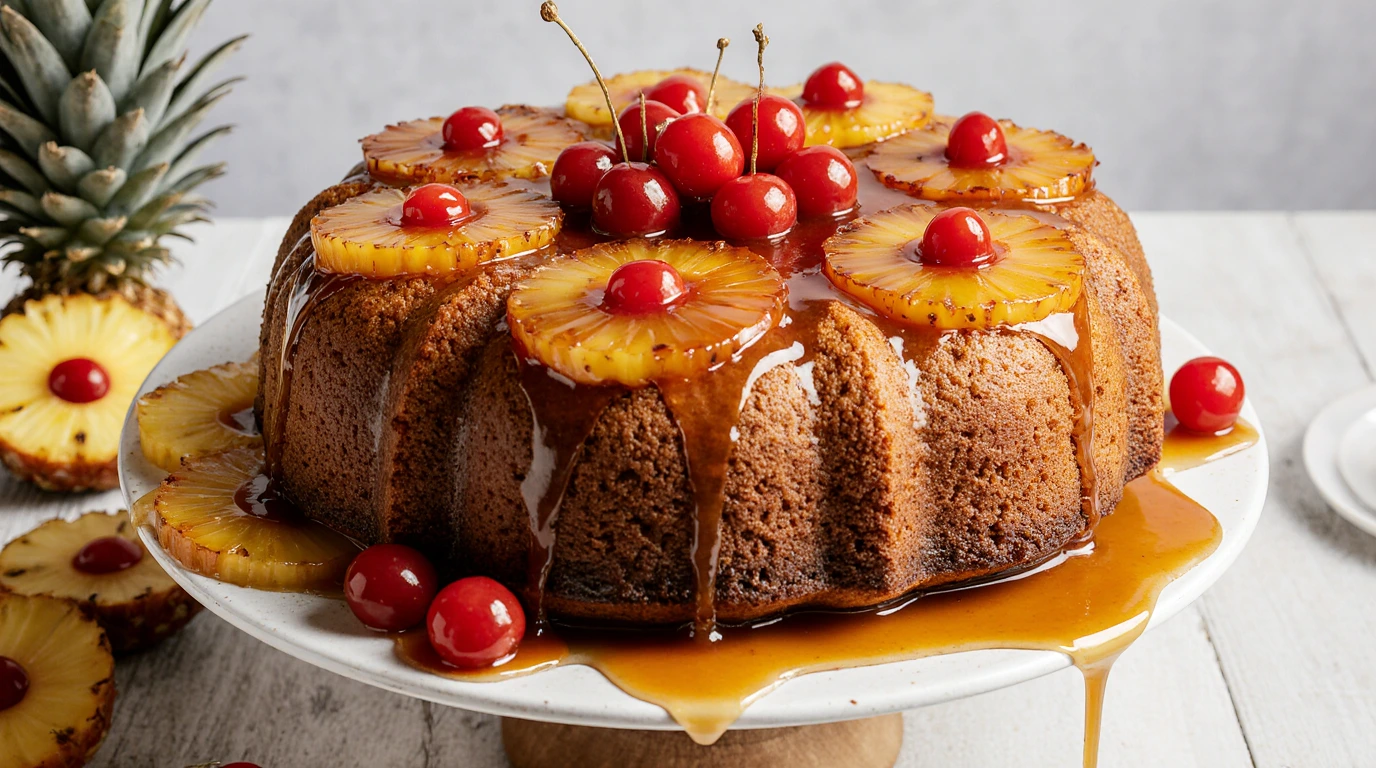
Here’s the moment of truth! Let the cake cool in the pan on a wire rack for exactly 15 minutes—no more, no less. This allows the topping to set slightly. Run a thin knife around the edge. Place your serving plate upside-down over the pan. With confidence (and oven mitts!), flip the plate and pan over in one swift motion. Lift the pan away slowly. Behold your masterpiece!
Nutritional Information
The following is an estimate per serving (1 of 10 slices), calculated using standard ingredients.
- Calories: ~380 kcal
- Total Fat: 16g
- Saturated Fat: 10g
- Cholesterol: 75mg
- Sodium: 180mg
- Total Carbohydrates: 58g
- Dietary Fiber: 1g
- Sugars: 42g
- Protein: 4g
Healthier Alternatives for the Recipe
Enjoy this classic dessert while tailoring it to your dietary preferences.
- Gluten-Free: Substitute the all-purpose flour with a 1:1 gluten-free baking blend. Ensure your baking powder is GF.
- Dairy-Free: Use plant-based butter (for both topping and batter) and coconut yogurt instead of sour cream.
- Reduced Sugar: Cut the granulated sugar in the batter to 1/2 cup and use a sugar substitute blend designed for baking in the topping. The natural sugars in the pineapple will still provide sweetness.
- Whole Grain: Replace up to half of the all-purpose flour with white whole wheat flour for added fiber without compromising texture significantly.
Serving Suggestions
This cake is a star on its own, but a few accompaniments can elevate it.
- À La Mode: Serve a warm slice with a scoop of high-quality vanilla bean ice cream. The hot/cold contrast is sublime.
- Creamy Counterpoint: A dollop of freshly whipped cream or a drizzle of cold, heavy cream cuts the richness beautifully.
- Tropical Twist: Add a sprinkle of toasted coconut flakes or a side of macerated berries for a fresh, colorful plate.
- Brunch Brilliance: Pair a slice with a cup of strong coffee for the perfect weekend treat.
Common Mistakes to Avoid
Learn from common pitfalls to ensure baking success.
- Using Syrup-Packed Pineapple: This makes the topping overly sweet and can lead to a gummy texture. Always opt for pineapple in 100% juice.
- Skipping the Pat-Dry: Excess moisture from the fruit is the #1 cause of a soggy cake bottom (which becomes the top!). Take 30 seconds to pat the rings dry.
- Overmixing the Batter: Once you add the flour, mix until just combined. Overworking develops gluten, leading to a tough cake.
- Flipping Too Soon or Too Late: The 15-minute cooling window is crucial. Flip too soon, and the topping can slide off; flip too late, and the caramel can harden and stick.
- Not Using Room Temperature Ingredients: Cold eggs and butter don’t emulsify properly, resulting in a dense batter. Plan ahead for a fluffier crumb.
Storing Tips for the Recipe
- Room Temperature: Store covered at room temperature for up to 2 days. A cake dome or inverted bowl is perfect.
- Refrigerator: For longer storage, keep in the fridge for up to 5 days. Let slices come to room temperature or warm slightly before serving.
- Freezing: This cake freezes beautifully! Wrap the completely cooled cake (or individual slices) tightly in plastic wrap and then foil. Freeze for up to 3 months. Thaw overnight in the refrigerator.
Conclusion
This no-fuss Pineapple Upside Down Cake recipe delivers a moist, buttery cake with a perfect caramelized fruit topping. By following these simple steps and tips, you’ll achieve a stunning, classic dessert that’s sure to impress. Ready to bake your best cake yet? We’d love to see your creation! Share a photo and your feedback in the comments section below, and don’t forget to subscribe for more foolproof, delicious recipes delivered straight to your inbox.
FAQs
Q: Can I use fresh pineapple instead of canned?
A: Absolutely! For best results, peel, core, and slice a fresh pineapple into rings. Simmer them in a light syrup (1/2 cup water + 1/4 cup sugar) for about 10 minutes to soften and sweeten slightly before arranging in the pan.
Q: Why did my fruit topping stick to the pan?
A: This usually happens if the cake cooled too long before flipping (letting the caramel re-harden) or if the heat was too high during baking, causing the sugar to become brittle. Sticking to the 15-minute cooling rule and accurate oven temperature is key.
Q: Can I make this cake in advance?
A: Yes, you can bake it a day ahead. Store it covered at room temperature. The flavors often meld and improve overnight. For best presentation, flip it onto your serving plate just before serving.
Q: What can I use if I don’t have sour cream?
A: Full-fat plain yogurt, buttermilk, or even well-shaken canned coconut milk are excellent substitutes that will maintain the cake’s moisture and tender texture.
Q: Is it necessary to use maraschino cherries?
A: While traditional, they are optional! You can use fresh or frozen cranberries, halved pecans, or even leave the pineapple rings plain for a simpler look.
Try These Recipes Next !!
If you love cooking and are looking for more recipes, we have a selection you’ll enjoy.
- Cranberry Orange Loaf Cake
- Fun and Easy 18th Birthday Cake
- Chocolate Chunk Banana Bread
- Cat Birthday Cake
- Stitch Birthday Cake
Leave a Reply
There are no reviews yet. Be the first one to write one.